We’re happy to share we’ve completed a series of pilot recellularization experiments, in preparation for completing Milestone III. The goal of this study was to confirm that our decellularized scaffold supports new cell attachment and early growth under controlled conditions.
1) Decellularization: Confirming a Usable Scaffold
Before new cells can emerge, the original cellular material must be removed. Chief Bioengineer Ján Kováč confirmed that the decellularization process produced a clean scaffold and, importantly, that the scaffold was non-toxic to donor cells—a baseline requirement for our downstream recellularization work.
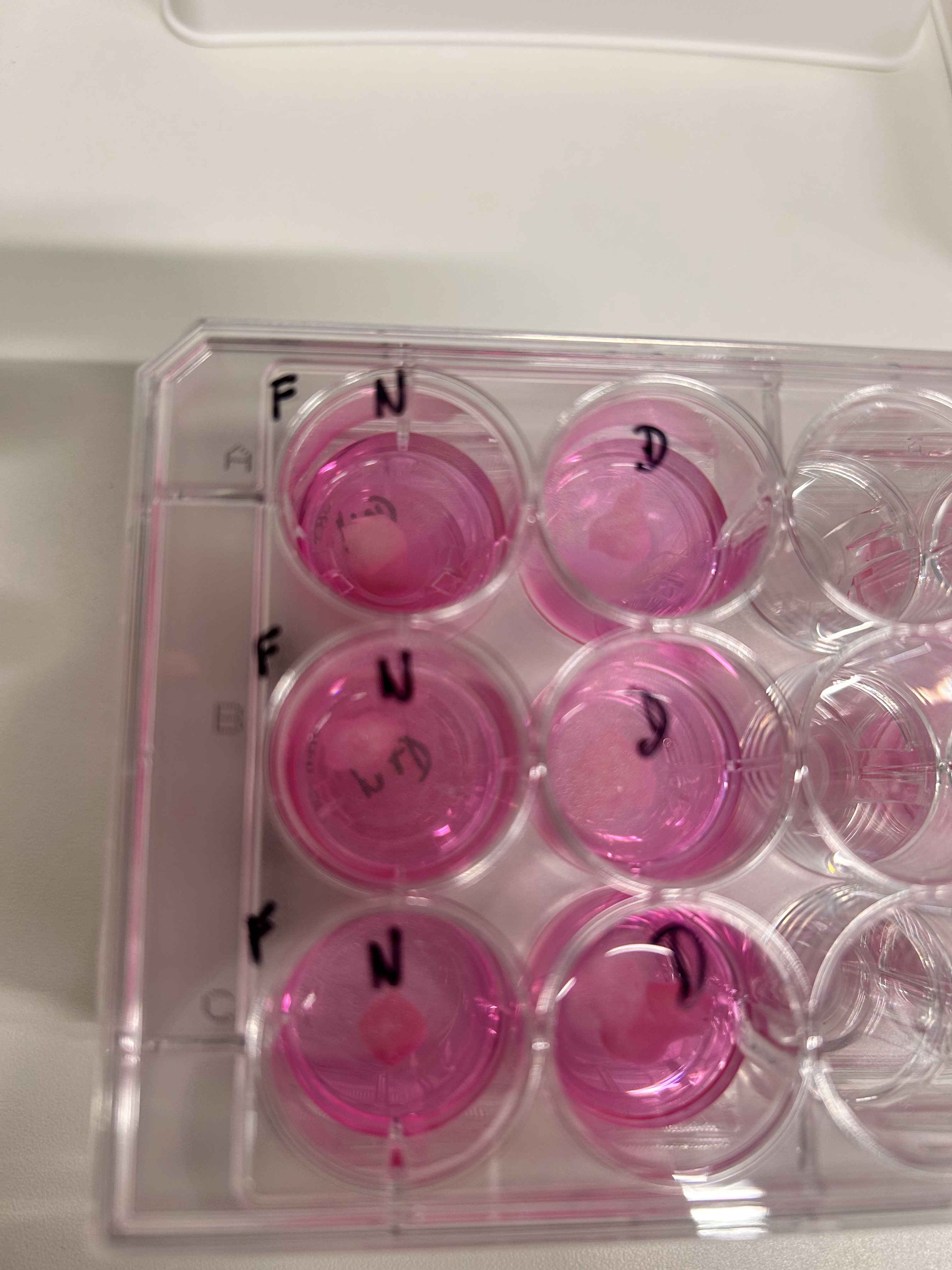
2) Short-term recellularization (2 days)
In the pilot phase, the team achieved 2-day recellularization of 5 mm diameter tissue samples, using static decellularization. This early window is used to evaluate whether cells can attach to the scaffold and begin the first stages of growth.
3) Verification: cell attachment and early proliferation
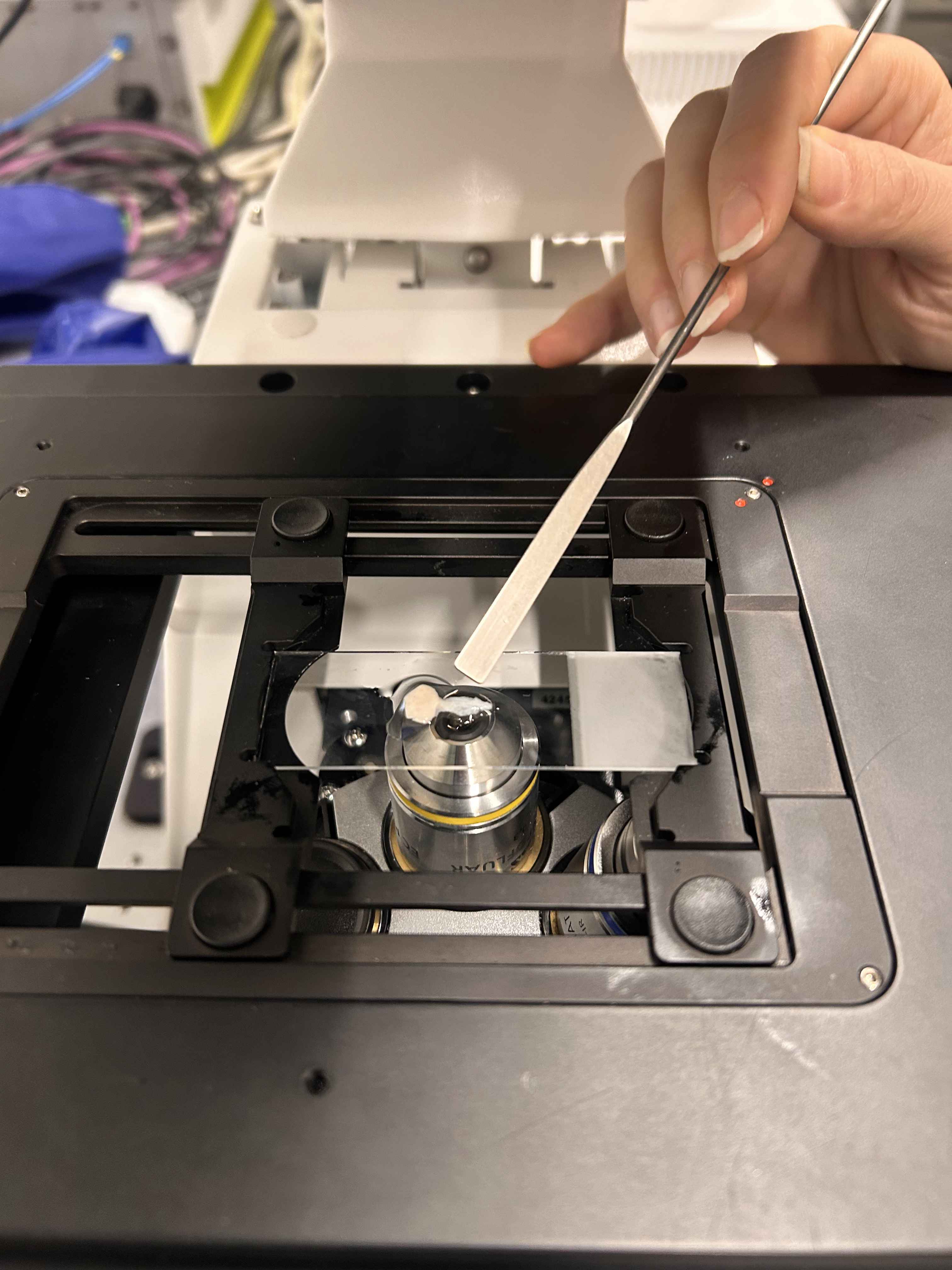
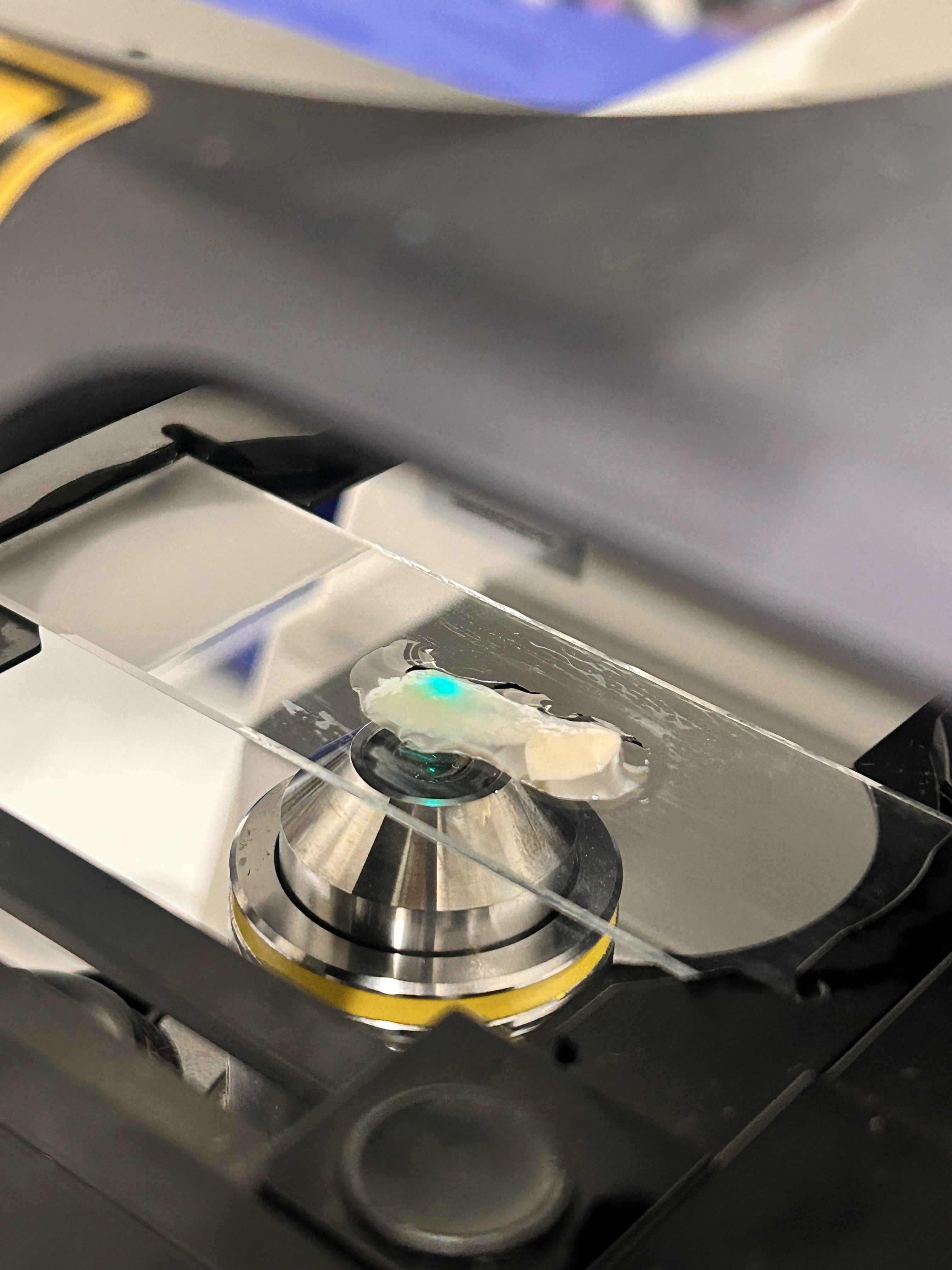
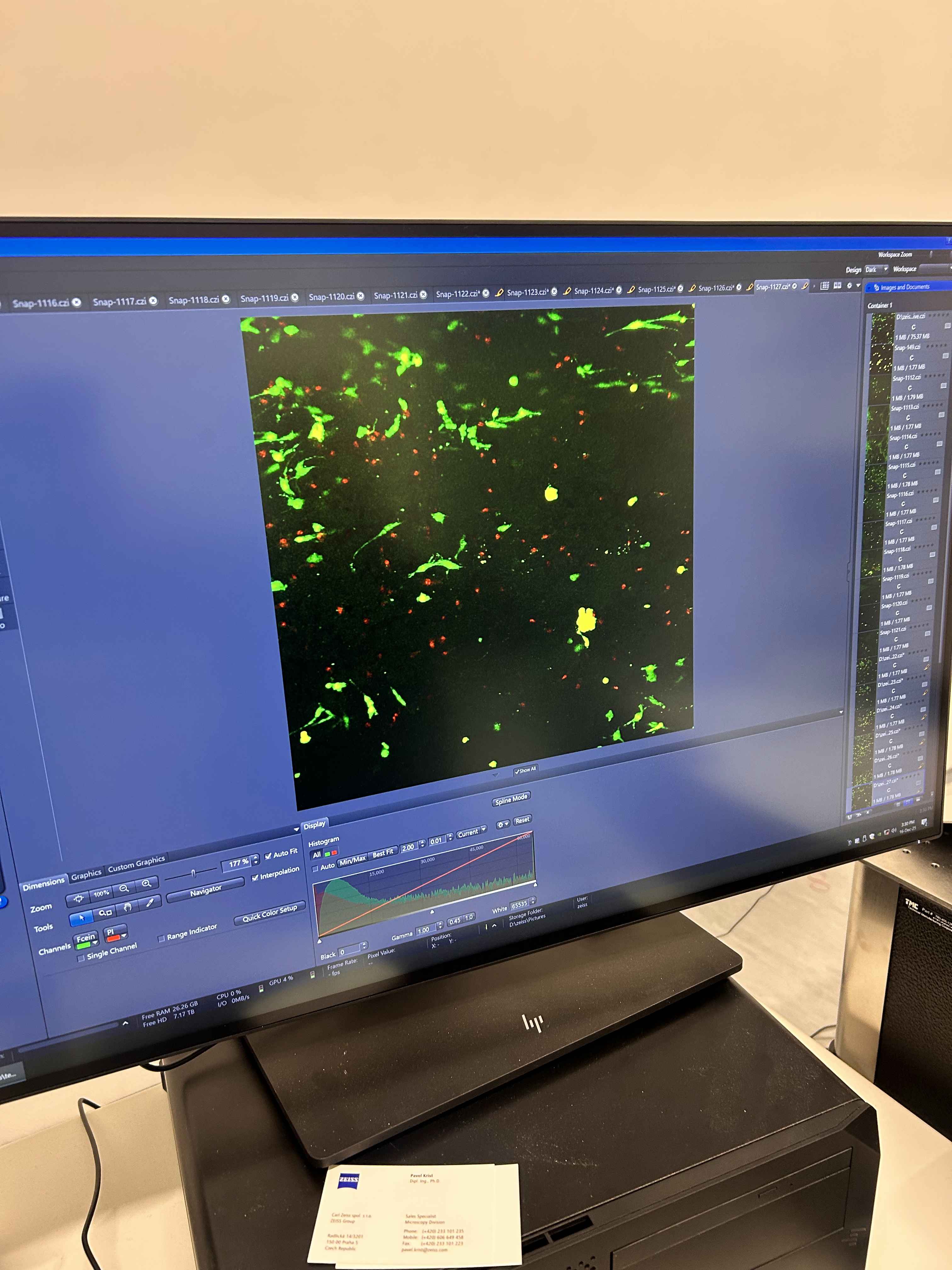
To assess results, we used confocal transmission microscopy with fluorescent staining, allowing visualization within the tissue structure. We observed that multiple cell types—including fibroblasts, keratinocytes, and stem cells—were able to:
- Attach to the scaffold
- Begin proliferating
- Start organizing within the structure
4) Reproducibility across samples
These results were verified across ~50 samples, providing confidence that the process is reproducible at this stage.
What’s next
This marks an important step within Milestone III. With early attachment and viability confirmed at pilot scale, we’re moving into protocol refinement next, to test the full recellularization of complete foreskin samples. That will completed Milestone III and allow us to proceed onto Milestone IV.
Thank you for your continued support!